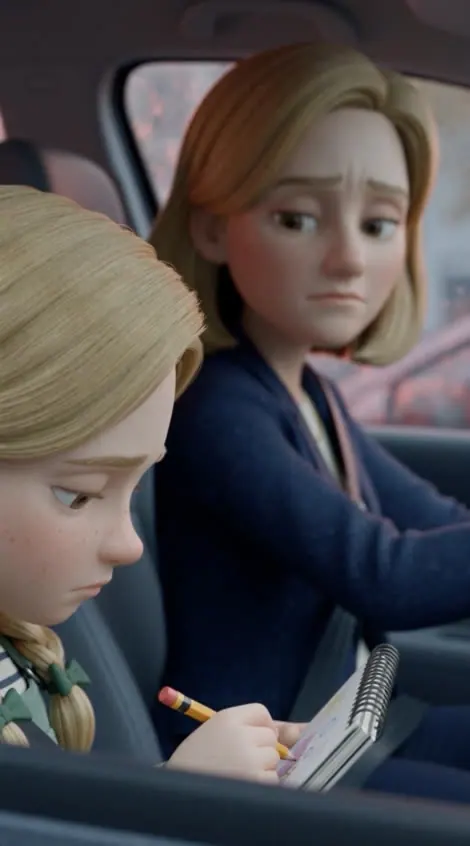
AI film · "Mama has Superpowers" · October 2026

How I made my first Pixar-style animation with AI tools.

OpenArtSeedance 2.5Nano Banana 2Lyria 3 ProElevenLabsCapCut Pro2 days
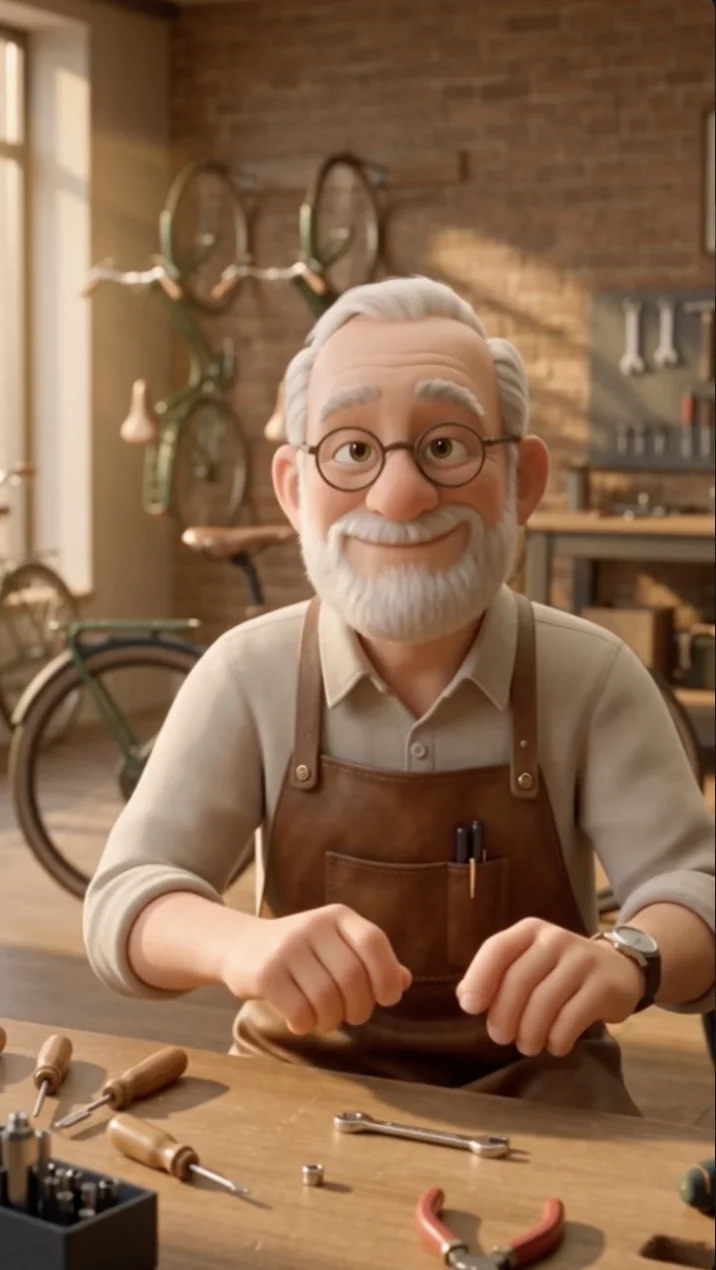
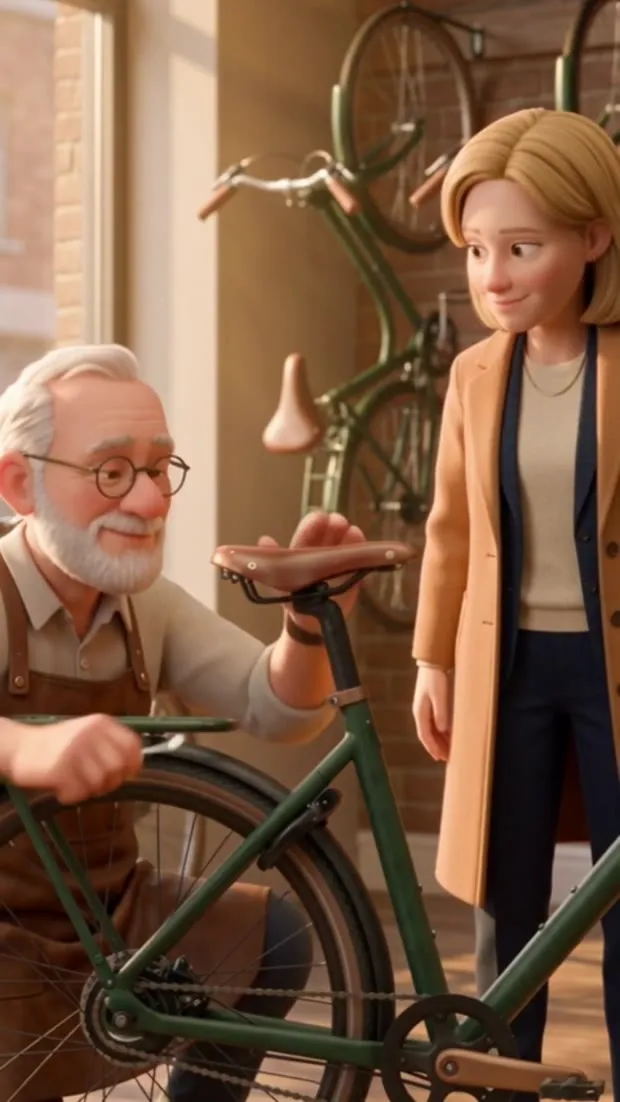
The craftsman adjusts the saddle of a forest green bike while Clarissa watches 1:48 · sound on

I have spent most of my working life behind a camera. Cruise ship stages, live broadcasts, corporate shoots. Animation was always the thing I watched other people do, because it needed a studio, a team and years I did not have.

Ich habe den größten Teil meines Berufslebens hinter einer Kamera verbracht. Bühnen auf Kreuzfahrtschiffen, Live-Übertragungen, Corporate-Drehs. Animation war immer etwas, das ich bei anderen gesehen habe, denn dafür brauchte man ein Studio, ein Team und Jahre, die ich nicht hatte.

Then a marketing assignment handed me an excuse. The course wanted a brand story: the launch of Nº28, a fictional e-bike from my course project. I wanted to find out whether the AI tools everyone keeps talking about could actually hold a film together: the same character in six different shots, a camera that does what I ask, a voice, a score. So I built one, start to finish, and kept notes on everything that went wrong along the way.

Dann lieferte mir eine Marketing-Aufgabe einen Vorwand. Der Kurs wollte eine Markengeschichte: den Launch von Nº28, einem fiktiven E-Bike aus meinem Kursprojekt. Ich wollte herausfinden, ob die KI-Tools, über die alle reden, wirklich einen Film zusammenhalten können: dieselbe Figur in sechs verschiedenen Einstellungen, eine Kamera, die macht, was ich will, eine Stimme, eine Filmmusik. Also habe ich einen gemacht, von Anfang bis Ende, und mir alles notiert, was dabei schiefging.

The channel for that launch is Instagram, so the format was decided before the first frame: vertical 9:16, told in beats that work without sound, built for a phone held in one hand. Everything else grew out of that: how long a shot can hold attention, where the voice comes in, and why the ending has to land in the last three seconds.

Der Kanal für diesen Launch ist Instagram, deshalb stand das Format vor dem ersten Bild fest: Hochformat 9:16, in Momenten erzählt, die auch ohne Ton funktionieren, gemacht für ein Handy, das man in einer Hand hält. Alles andere ergab sich daraus: wie lange eine Einstellung die Aufmerksamkeit halten kann, wo die Stimme einsetzt und warum das Ende in den letzten drei Sekunden sitzen muss.

Two days later there was a finished animated short on my screen. This is how it was made.

Zwei Tage später lief ein fertiger Animationskurzfilm auf meinem Bildschirm. So ist er entstanden.

01The brief

Before the story, the person.

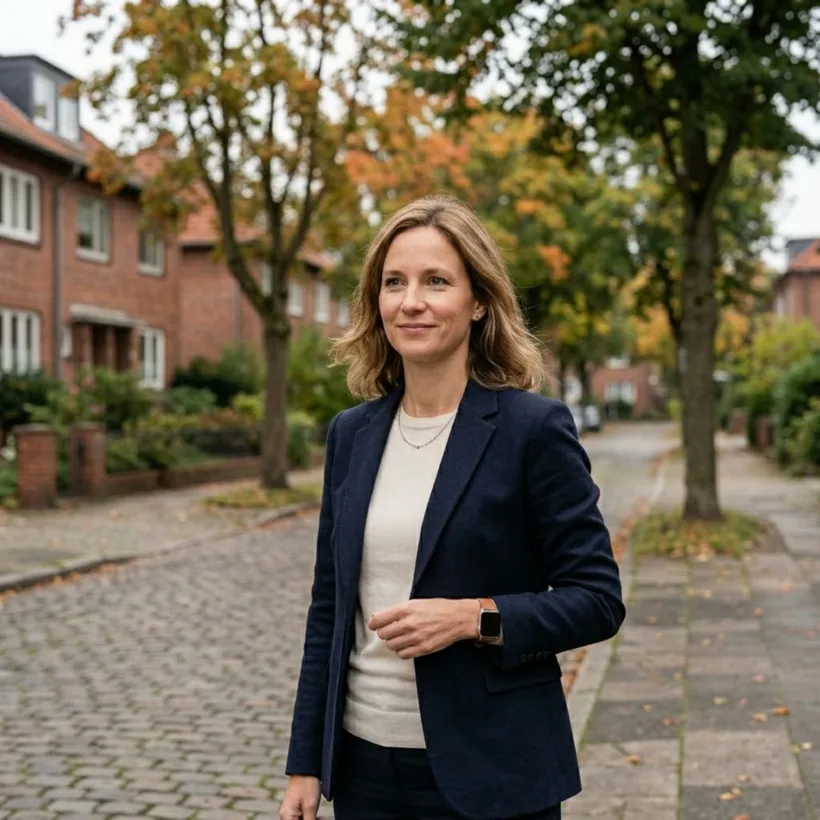
Clarissa Meyer, the persona: a woman in her forties in a navy blazer on a Hamburg street

This is chapter two of my Digital Marketing Manager course at XDi: Brand Communication, Branding & PR. The client is fictional, the brief is not. BicycleWorld, a family bicycle maker in Hamburg since 1928, is launching its first e-bike, the Nº28.

In an earlier assignment, the course asked me to build the person I am selling to. Not a target group, a person: an age, a job, a salary, a morning routine and a reason to say no.

Mine is Clarissa Meyer, the ideal customer for Nº28. Forty, a manager in Hamburg, two kids, 12 km of rush-hour traffic every morning, and no time in the day that belongs to her. She is afraid an expensive bike will be stolen, that Hamburg rain makes it a summer toy, and that it ends up like the two gym memberships she already pays for. I generated her portrait with Nano Banana 2 so she had a face. Every decision after this one came back to her.

The story came out of one line in the brief: the battery is hidden inside the frame, so from the outside Nº28 looks like a classic city bike. That is a problem for a photograph and a gift for a story. I turned it into a hashtag, #UnseenPower, and built the whole film to earn it: power you cannot see.

Die Geschichte entstand aus einer einzigen Zeile im Briefing: Der Akku ist im Rahmen versteckt, von außen sieht Nº28 also aus wie ein klassisches Stadtrad. Für ein Foto ist das ein Problem, für eine Geschichte ein Geschenk. Ich habe daraus einen Hashtag gemacht, #UnseenPower, und den ganzen Film darauf ausgerichtet, ihn einzulösen: Kraft, die man nicht sieht.

02From worksheet to storyboard

The brief never asked for this. That was the point.

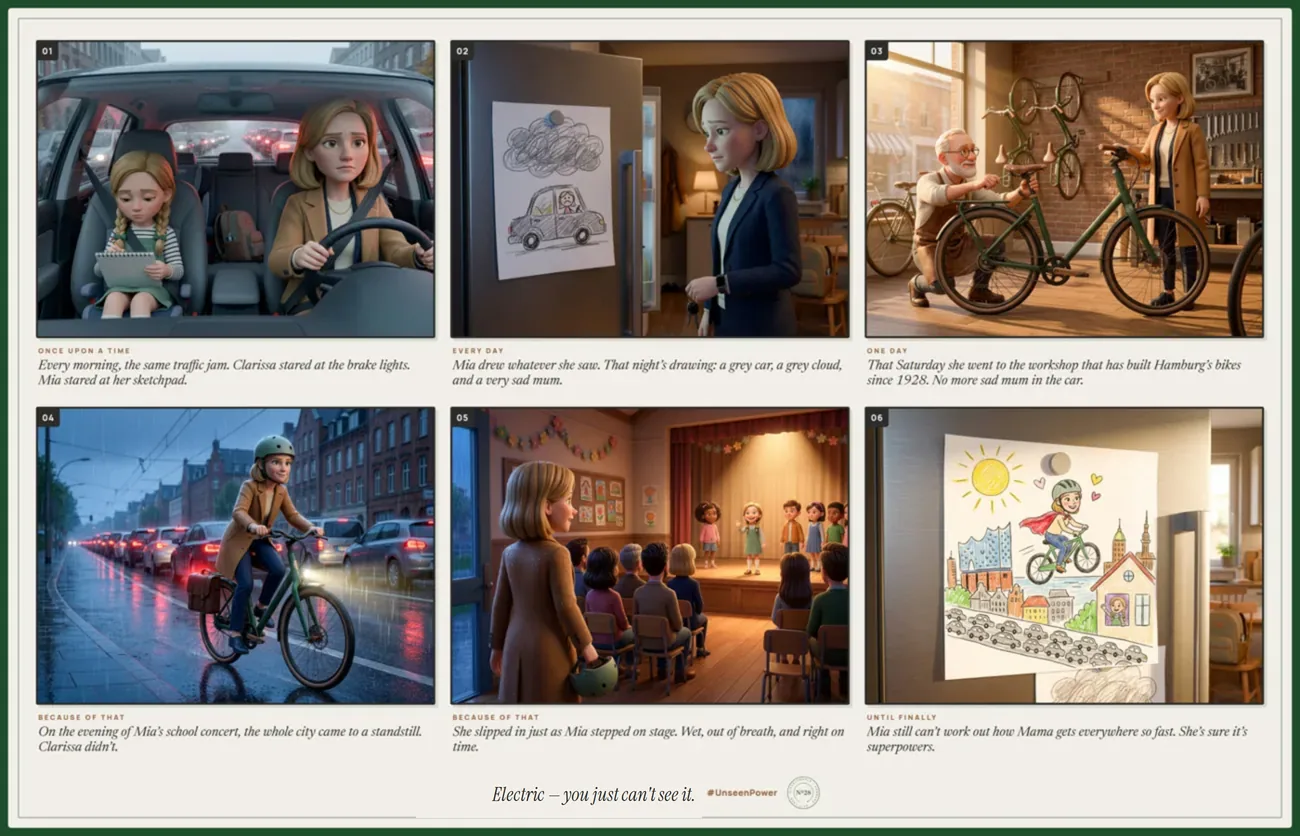
The chapter's To Do List worksheet asked me to watch Pixar's introduction to storytelling, find the story BicycleWorld can tell, and express it in one of two ways: flash fiction, a single picture with text, or a comic made of a few pictures and few words. Simple formats, made to be pasted into a worksheet.

I wanted to take it a step further and take advantage of my filmmaking knowledge. The course was teaching me the Pixar way of building a hero's journey, so I thought it would be great to follow that line of thought all the way, and give them back something they might actually enjoy reviewing. So I treated the comic as a storyboard instead of a deliverable, and built it the way I would build one for a shoot: one frozen moment per panel, one camera angle, one action. If a panel needed the words "and then", it was two panels.

Ich wollte einen Schritt weiter gehen und mein Wissen aus dem Filmemachen nutzen. Der Kurs brachte mir bei, wie Pixar eine Heldenreise aufbaut, also wollte ich diesen Gedanken ganz zu Ende gehen und etwas abgeben, das man vielleicht sogar gerne bewertet. Deshalb habe ich den Comic als Storyboard behandelt statt als Abgabe und ihn so gebaut, wie ich eines für einen Dreh bauen würde: ein eingefrorener Moment pro Panel, ein Kamerawinkel, eine Handlung. Brauchte ein Panel die Worte „und dann“, waren es zwei Panels.

The story spine
  • Once upon a time, every day
  • One day, because of that
  • Until finally
The storyboard rules
  • One frozen moment per panel
  • One camera angle per panel
  • Panel six answers panel two
The idea
  • A kid cannot see a battery
  • So Mama must have superpowers
  • The claim becomes the punchline
The six-panel comic board: the car, the drawing on the fridge, the workshop, the rain ride, the school concert, the superhero drawing

By the time the six panels were approved, the hardest part of the animation was already solved: what happens, in what order, and the exact frame each shot starts on. Panel one became a twenty-second opening. Panel six became a five-second ending.

03The characters

Nobody animates a photo. So Clarissa was redrawn.

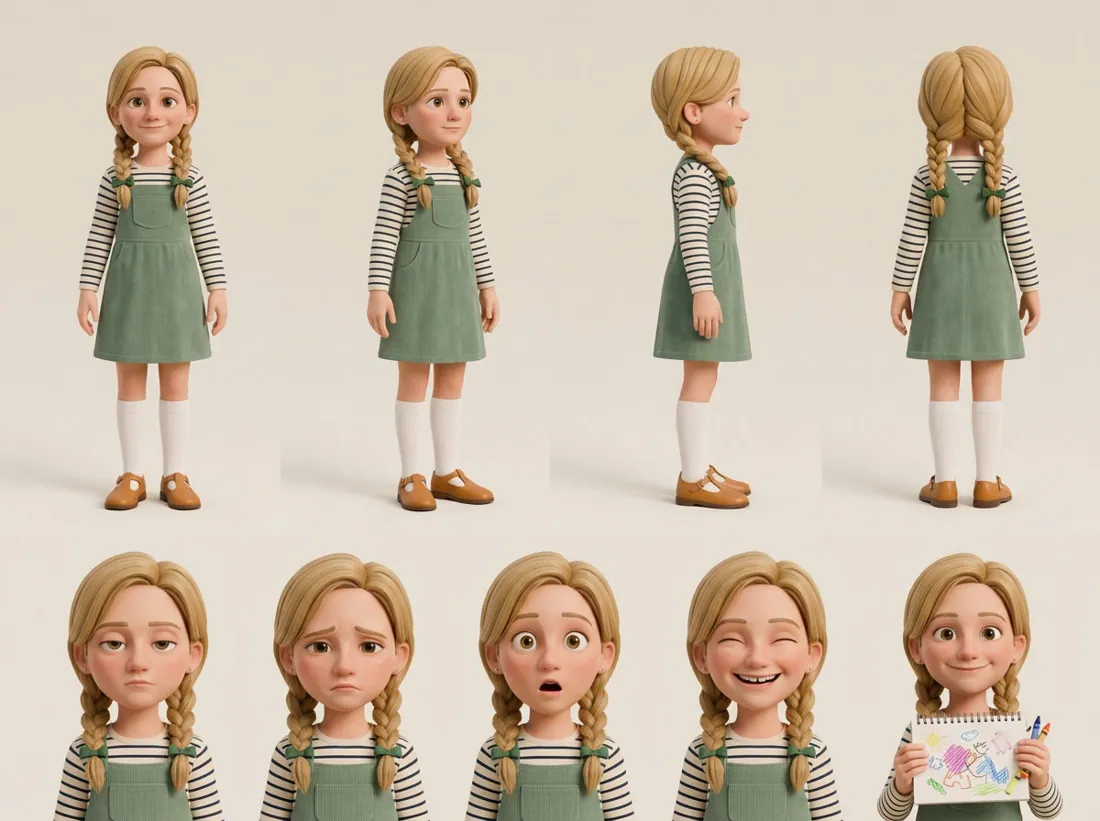
Both character sheets were generated in OpenArt with Nano Banana 2, which holds a consistent look across generations and is cheap enough to iterate on. The two of them took about an hour to generate and refine.

The persona image is photoreal, which is exactly wrong for this story. A real woman riding past a traffic jam is an advert. A stylised 3D family-film character carrying her daughter's drawing is a story, and it is the only way the ending works: you accept a crayon mum flying over Hamburg because the whole world is already drawn.

Das Persona-Bild ist fotorealistisch, und genau das ist für diese Geschichte falsch. Eine echte Frau, die an einem Stau vorbeifährt, ist Werbung. Eine stilisierte 3D-Familienfilm-Figur mit der Zeichnung ihrer Tochter ist eine Geschichte, und nur so funktioniert das Ende: Man glaubt einer Buntstift-Mama, die über Hamburg fliegt, weil die ganze Welt ohnehin gezeichnet ist.

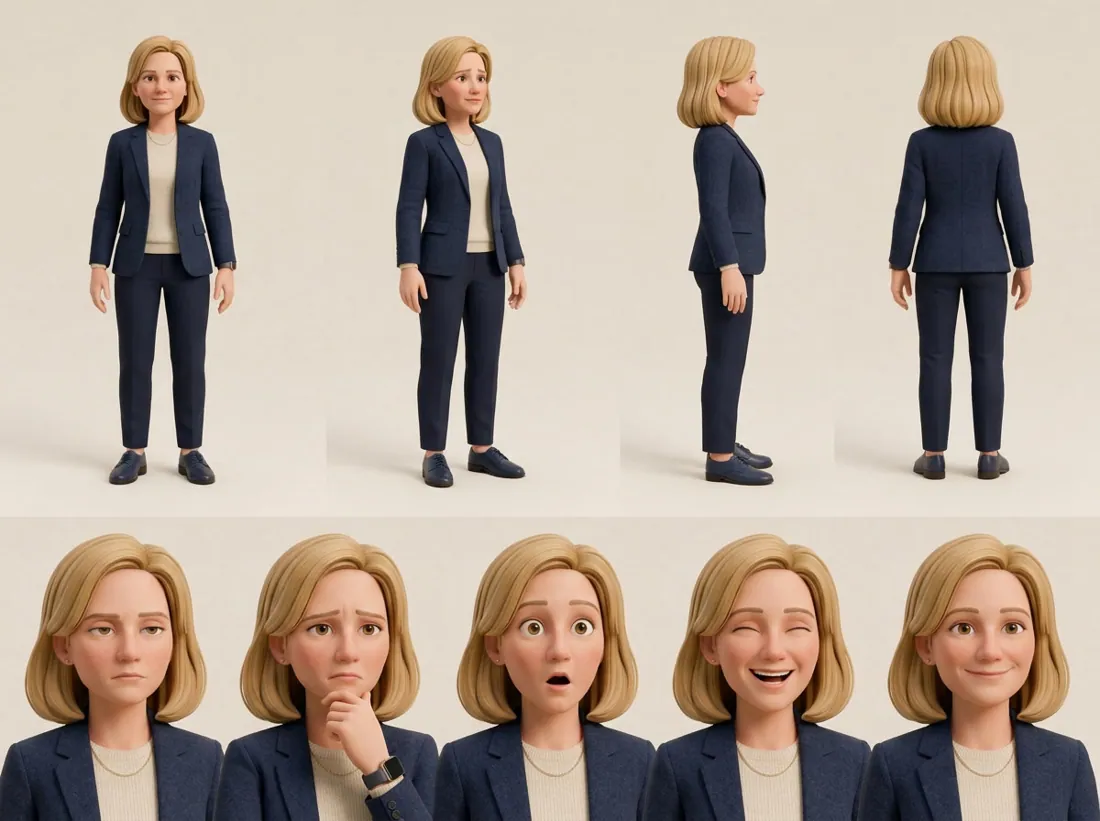
Stylised 3D turnaround sheet of Clarissa with expressions
Clarissa, 40
Prompt
@[Clarissa's realistic sheet] Use it only for the 3D animation style, rendering, lighting and family resemblance (same dark-blonde hair colour, similar warm brown eyes). Do not copy its layout, poses or outfit.

LAYOUT: Character turnaround sheet on a plain warm light-grey background, evenly spaced, same scale for every view. Top row, full body standing, relaxed pose: front view, three-quarter view, side profile, back view — her head and face clearly visible in every view except the back. Bottom row, head-and-shoulders expressions: bored, sad and thoughtful, surprised, beaming with joy, content and proud.

STYLE: Same stylised 3D animated family-feature-film look: soft rounded shapes, expressive face, soft global illumination, even studio lighting.

KEEP: Natural 40-year-old proportions. The same outfit and hair in every view.

AVOID: Missing or cropped heads, toddler proportions, teenager proportions, oversized anime eyes, make-up, extra characters, text, labels, letters, logos.
@[Clarissas realistisches Sheet] Nur für den 3D-Animationsstil, das Rendering, das Licht und die Familienähnlichkeit verwenden (gleiche dunkelblonde Haarfarbe, ähnlich warme braune Augen). Layout, Posen und Outfit nicht übernehmen.

LAYOUT: Character-Turnaround-Sheet auf schlichtem, warm-hellgrauem Hintergrund, gleichmäßig verteilt, jede Ansicht im selben Maßstab. Obere Reihe, ganzer Körper stehend, entspannte Pose: Vorderansicht, Dreiviertelansicht, Seitenprofil, Rückansicht – Kopf und Gesicht in jeder Ansicht außer der Rückansicht gut sichtbar. Untere Reihe, Ausdrücke als Kopf-und-Schulter-Aufnahme: gelangweilt, traurig und nachdenklich, überrascht, strahlend vor Freude, zufrieden und stolz.

STIL: Derselbe stilisierte 3D-Look eines animierten Familienfilms: weiche, runde Formen, ausdrucksstarkes Gesicht, weiche Global Illumination, gleichmäßiges Studiolicht.

BEIBEHALTEN: Natürliche Proportionen einer 40-Jährigen. Dasselbe Outfit und dieselbe Frisur in jeder Ansicht.

VERMEIDEN: Fehlende oder abgeschnittene Köpfe, Kleinkind-Proportionen, Teenager-Proportionen, übergroße Anime-Augen, Make-up, zusätzliche Figuren, Text, Beschriftungen, Buchstaben, Logos.
Stylised 3D turnaround sheet of Mia with five expressions
Mia, 10 · built from Clarissa's sheet
Prompt
@[Clarissa's character sheet] Use it only for the 3D animation style, rendering, lighting and family resemblance (same dark-blonde hair colour, similar warm brown eyes). Do not copy its layout, poses or outfit.

CHARACTER: Mia, Clarissa's 10-year-old daughter. Super cute, lively and curious. Round face with soft rosy cheeks, light freckles across her nose, big warm brown eyes, a small gap between her front teeth when she smiles. Dark-blonde hair in two loose braids tied with small forest-green ribbons, a few strands escaping at the front. Cream long-sleeve top with thin navy stripes, sage-green corduroy pinafore dress, white knee socks, tan leather T-bar shoes. She always carries a small sketchpad and a few crayons.

LAYOUT: Character turnaround sheet on a plain warm light-grey background, evenly spaced, same scale for every view. Top row, full body standing, relaxed pose: front view, three-quarter view, side profile, back view — her head and face clearly visible in every view except the back. Bottom row, head-and-shoulders expressions: bored, sad and thoughtful, surprised, beaming with joy, proud while holding up her sketchpad.

STYLE: Same stylised 3D animated family-feature-film look: soft rounded shapes, expressive face, soft global illumination, even studio lighting.

KEEP: Natural 10-year-old proportions, about chest height to an adult woman. The same outfit, braids and ribbons in every view.
AVOID: Missing or cropped heads, toddler proportions, teenager proportions, oversized anime eyes, make-up, extra characters, text, labels, letters, logos.
@[Clarissas Character Sheet] Nur für den 3D-Animationsstil, das Rendering, das Licht und die Familienähnlichkeit verwenden (gleiche dunkelblonde Haarfarbe, ähnlich warme braune Augen). Layout, Posen und Outfit nicht übernehmen.

FIGUR: Mia, Clarissas 10-jährige Tochter. Super süß, lebhaft und neugierig. Rundes Gesicht mit zart rosigen Wangen, leichte Sommersprossen über der Nase, große warme braune Augen, eine kleine Lücke zwischen den Vorderzähnen, wenn sie lächelt. Dunkelblonde Haare in zwei lockeren Zöpfen mit kleinen waldgrünen Schleifen, ein paar Strähnen fallen vorne heraus. Cremefarbenes Langarmshirt mit dünnen marineblauen Streifen, salbeigrünes Trägerkleid aus Cord, weiße Kniestrümpfe, hellbraune Spangenschuhe aus Leder. Sie hat immer einen kleinen Skizzenblock und ein paar Buntstifte dabei.

LAYOUT: Character-Turnaround-Sheet auf schlichtem, warm-hellgrauem Hintergrund, gleichmäßig verteilt, jede Ansicht im selben Maßstab. Obere Reihe, ganzer Körper stehend, entspannte Pose: Vorderansicht, Dreiviertelansicht, Seitenprofil, Rückansicht – Kopf und Gesicht in jeder Ansicht außer der Rückansicht gut sichtbar. Untere Reihe, Ausdrücke als Kopf-und-Schulter-Aufnahme: gelangweilt, traurig und nachdenklich, überrascht, strahlend vor Freude, stolz, während sie ihren Skizzenblock hochhält.

STIL: Derselbe stilisierte 3D-Look eines animierten Familienfilms: weiche, runde Formen, ausdrucksstarkes Gesicht, weiche Global Illumination, gleichmäßiges Studiolicht.

BEIBEHALTEN: Natürliche Proportionen einer 10-Jährigen, etwa brusthoch zu einer erwachsenen Frau. Dasselbe Outfit, dieselben Zöpfe und Schleifen in jeder Ansicht.
VERMEIDEN: Fehlende oder abgeschnittene Köpfe, Kleinkind-Proportionen, Teenager-Proportionen, übergroße Anime-Augen, Make-up, zusätzliche Figuren, Text, Beschriftungen, Buchstaben, Logos.
Why a character sheet

Image models have no memory. Ask for the same woman twice and you get sisters. A turnaround sheet fixes her once: front, three-quarter, profile and back at the same scale, plus a row of expressions. Every prompt after that points back at the sheet, and the face, the hair and the clothes stop drifting between shots.

The one line that saved the most credits

Use the sheet only for character design: the face, the hair, the outfit, the rendering style. Never for its layout, poses or background. Without that sentence the model copies the sheet itself and hands you another turnaround instead of a scene.

04Directing the shots

Twenty seconds, three times. Each time for a different reason.

Stills were the easy half. Movement is where it gets expensive: every generation costs credits, and a model that misreads one line hands you twenty useless seconds. I generated with Seedance 2.5 at 480p, twenty seconds a clip, and worked in passes — first to feel the pace, then to fix what the pace exposed, then one more take so I had a choice in the edit.

I wrote the direction myself: camera moves, cuts, timings, where the focus sits, what the actors do between the beats. Claude turned my direction into model language and flagged what was likely to break. The structure comes from image-to-video prompting. The filmmaking is mine.

Here is the opening beat, generation by generation. Two problems, each fixed by a different change to the prompt.

Generation 1

Blocking only

The prompt describes the camera and nothing else. The drawing breaks twice in the same clip.
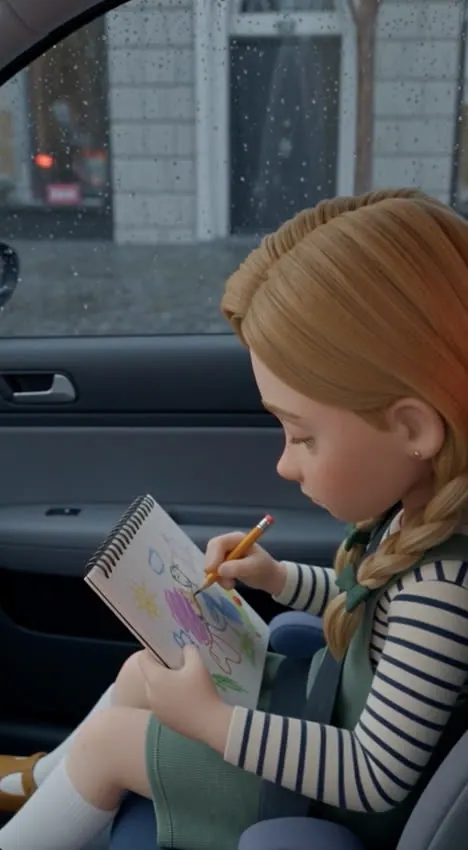
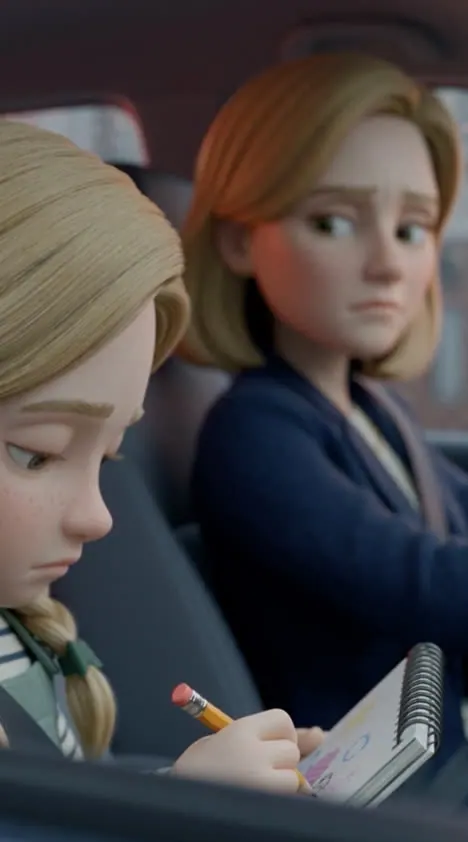
Mia drawing a bright invented picture that should not be visible
Fail 1The sketchpad is in full view and the model invented what is on it. The prompt said the drawing must never be visible, so there was nothing to draw from.
The invented drawing still showing in the two-shot at the end of the clip
Fail 2And again in the last beat: the same invented drawing sits in the corner of the frame, where the shot was supposed to stay on the two of them.
Generation 2

Give it the drawing

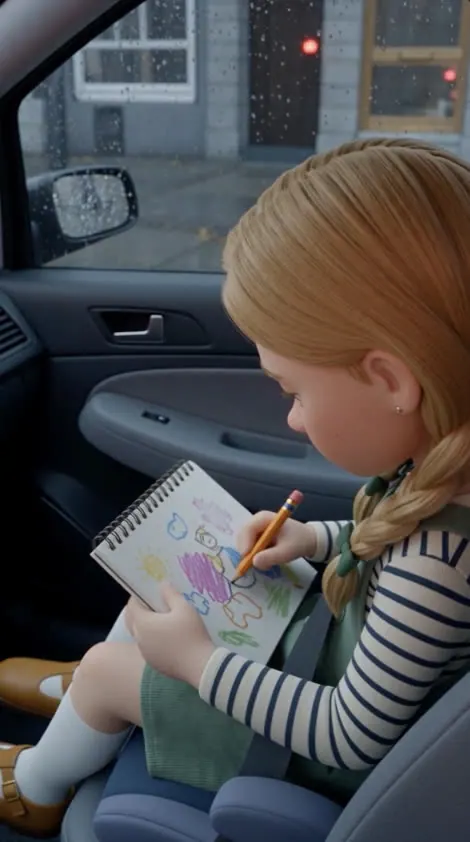
Instead of hiding the sketchpad, I attached Mia's real drawing as a reference and asked for a glimpse of it, added the car scene as the outfit reference, and made her grip tighten visibly.

The drawing is still invented, bright crayon scribbles
Fail 1 · still thereThe close-up still shows the model's own drawing. Naming the reference inside a beat was not enough to make it authoritative.
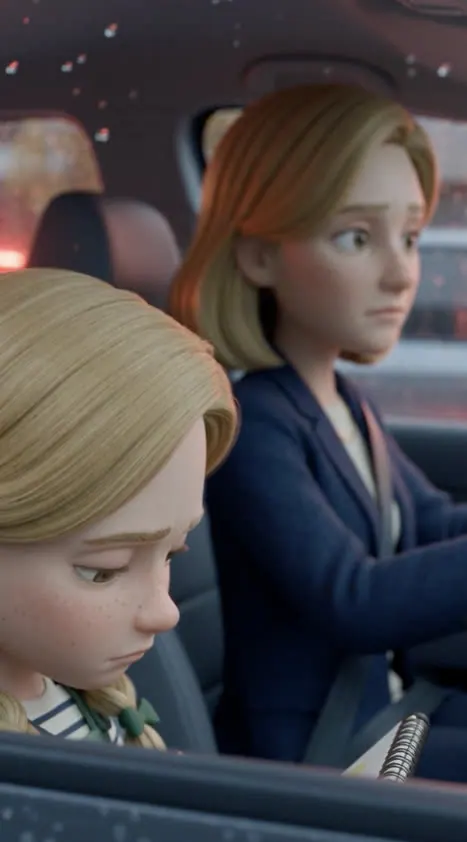
The last beat without the wrong drawing in frame
Fail 2 · fixedThe second appearance is clean. The wrong drawing is out of the frame where it does not belong.
Generation 3

A reference header, and people who behave

The references move to the top of the prompt with a job each and one written exception: Mia's drawing has to be copied exactly. The beats also get behaviour, not just camera.

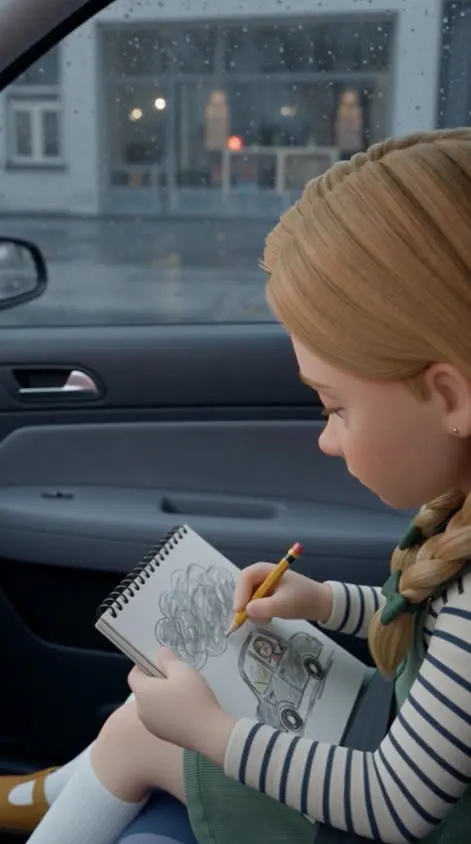
Mia drawing the correct grey car drawing from the reference
Fail 1 · fixedThe pad finally carries the drawing from the story: the grey car under a grey cloud, half finished, exactly as referenced.
A different drawing again in the second appearance
Fail 2 · back againIn the second appearance the drawing changed again. Fixing it in one beat did not hold it for the whole clip.

No single generation came out clean, so the opening shot in the film is not one of them. I took the beats that worked from generation 2 and the beats that worked from generation 3 and cut them together. That is the part people forget about these tools: you are not waiting for one perfect render, you are collecting usable pieces.

Keine einzelne Generierung war fehlerfrei, deshalb ist die erste Einstellung im Film keine von ihnen. Ich habe die gelungenen Beats aus Generierung 2 und die gelungenen Beats aus Generierung 3 genommen und zusammengeschnitten. Das vergessen viele bei diesen Tools: Man wartet nicht auf das eine perfekte Rendering, man sammelt brauchbare Teile.

Six beats, the same loop each time. I kept the takes that solved something, cut around the ones that did not, and stopped chasing a perfect generation once two attempts had failed on the same problem.

The working loop
  • 480p, 20 s, cheap
  • Feel the pace first
  • One change per regeneration
What I never skipped
  • Attach the object, don't describe it
  • One job per reference image
  • Tell the actors what to do, not only the camera
When to stop
  • Two failures on the same problem
  • Then change the approach, not the seed
  • Or take the good half and cut around it
05The narrator

The voice came from memory.

The old craftsman smiling at his workbench

The craftsman appears in a single scene and never got a character sheet. Seedance built him from the comic panel alone, and he came out with more presence than anyone I had designed on purpose: the hands, the glasses, the way he leans into the frame while he works.

Watching him, I knew who was telling this story. If he built the bike, he was there before any of it happened, and the brand stops talking about itself and becomes a character in the room.

Als ich ihn sah, wusste ich, wer diese Geschichte erzählt. Wenn er das Rad gebaut hat, war er da, bevor irgendetwas davon passierte, und die Marke hört auf, über sich selbst zu reden, und wird zu einer Figur im Raum.

I chose the voice on purpose. I built it from memory rather than from a sample. As a kid I watched David Attenborough documentaries on repeat, and apart from the interesting facts about my favourite animals, what stayed with me was the patience: a man who waits, who sounds quietly amused by what he is about to tell you. I mixed that with a couple of other voices I had in my head and wrote it as a brief: an American storyteller in his early seventies, warm, unhurried, a grandfather who has told this one before.

It came back right on the first try, so I stopped there. Then I performed the script line by line in ElevenLabs, with audio tags for the sighs, the chuckles and the parts he almost whispers.

The decision behind the script

My first script was correct and lifeless. It told you a woman was stuck in traffic while you watched a woman stuck in traffic. I have spent years cutting videos where the voice-over does exactly that, and I did not want this to sound like one of them.

So I rewrote it as a story he is telling, running alongside the pictures instead of on top of them. The images handle what is happening. He gets the things a picture cannot say: what she decided, what the girl believed, what he never told her.

What that changed

Short lines with room to breathe. Silence over the moments that carry themselves, like the empty chair and the wet helmet. A hook in the first five seconds that promises the ending without giving it away, and a last line that lands and stops.

06The score

A score written against the clock.

The score was generated in OpenArt with Lyria 3 Pro. I did not describe a mood, I wrote a cue sheet: one theme that returns changed at the end, every section pinned to the timecode of the finished cut, and a note about leaving room for the narrator. Here it is in full.

Die Filmmusik habe ich in OpenArt mit Lyria 3 Pro generiert. Ich habe keine Stimmung beschrieben, sondern ein Cue Sheet geschrieben: ein Thema, das am Ende verwandelt zurückkehrt, jeder Abschnitt am Timecode des fertigen Schnitts festgemacht, und ein Hinweis, Platz für den Erzähler zu lassen. Hier ist es vollständig.

One theme, two moods

A single piano melody named as the main theme, sad and sparse at the start, bright and joyful at the end, so the film closes where it opened.

Timecoded cues

Every section carries the timecode from the actual edit, so the score lands on the cut instead of the cut being bent to the score.

Mixed for a voice

An explicit instruction to keep the mid-range open and stay out of the way while the narrator speaks.

An avoid list

No vocals, no choir, no EDM, no trailer brass. A generated score drifts towards epic; this one had to stay domestic.

The score runs from the very first frame, but it starts almost empty: a single piano under the rain and the traffic, a few notes with space between them. It only begins to move when Clarissa walks into the workshop, builds while she rides past the jam, and at the end comes back to the same piano melody it started with, this time bright instead of sad.

07The edit

Where the film was actually made.

Assembly

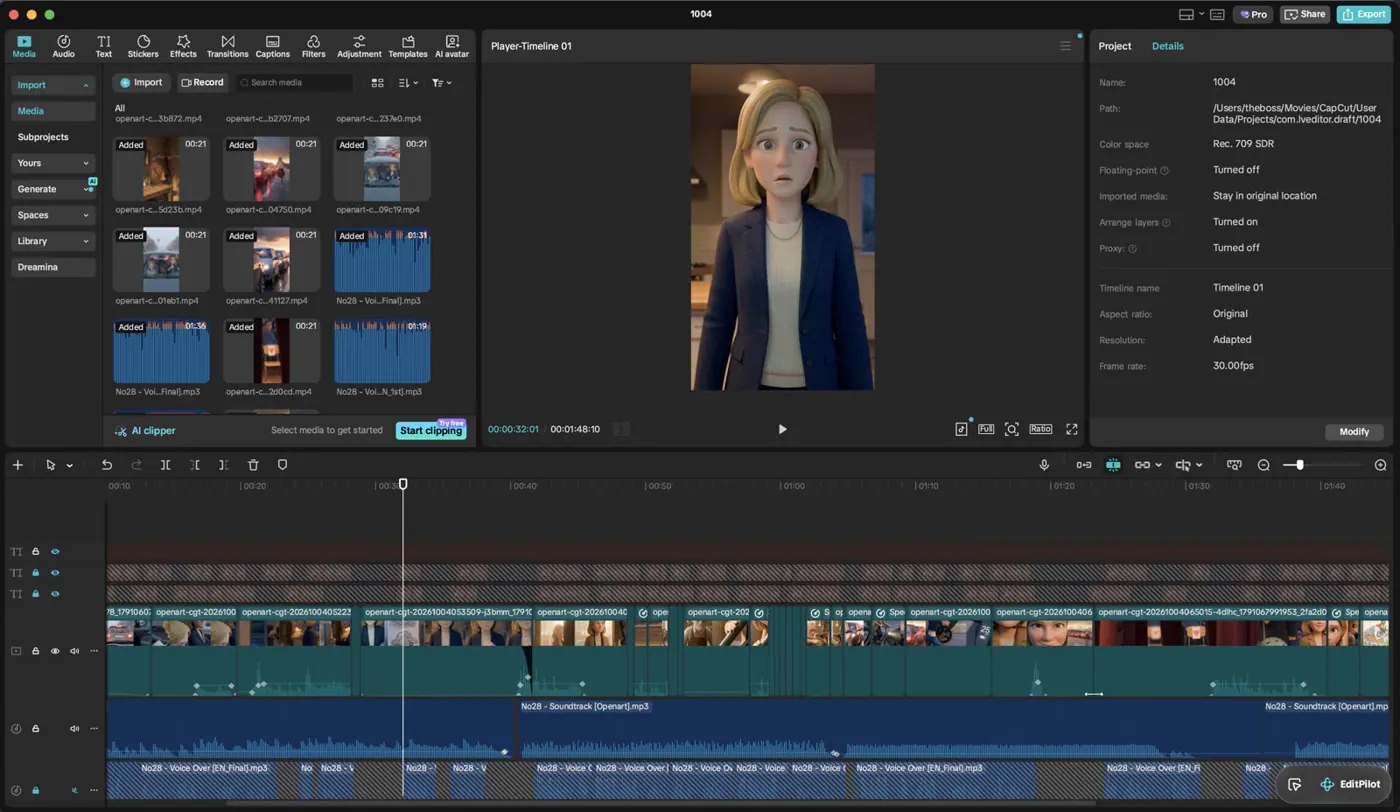
Everything came together in CapCut Pro: the six generated shots, the narration and the score. The clips did not arrive silent. Seedance delivered them with foley and a score of its own already mixed in.

I tried my best to separate that score from the foley, and it turned out to be much more complicated than I had hoped. So I adjusted the levels just enough to keep the most relevant foley sounds alive, and muted the rest.

Speed as a repair tool

Where a clip dragged or a movement landed late, I ramped it: slowed the moments that needed weight, sped up the parts that wandered. Every one of those is a regeneration I did not have to pay for, and the kind of fix that comes from editing, not from prompting.

Wo ein Clip sich zog oder eine Bewegung zu spät kam, habe ich mit Speed Ramps gearbeitet: Momente verlangsamt, die Gewicht brauchten, und Teile beschleunigt, die abschweiften. Jede dieser Stellen ist eine Neugenerierung, die ich nicht bezahlen musste, und die Art von Lösung, die aus dem Schnitt kommt, nicht aus dem Prompt.

The CapCut Pro timeline with the six shots, narration, score and sound layers
CapCut Pro timeline screenshot of the finalised project.

Two languages, two tempos

The film was cut in English first, then narrated in German. I had assumed the German lines would drop into the same slots. They did not. German takes longer to say the same thing, and the sentences break in different places, so the pauses fall somewhere else.

Both versions ended up adjusted: lines retimed, pauses re-cut, a few shots held a beat longer or trimmed a beat shorter so the picture lands with the voice. Two cuts of the same film, each one breathing in its own language.

What I would keep doing

Writing the second language against the finished cut rather than against the script. It still needs work, but it starts from the real timing instead of a guess, and it keeps both versions telling the story at the same speed even when the words do not.

08What I would do differently

Three things for the next one.

The product arrives at the workshop, almost halfway in. On a platform where people leave after three seconds, that is late. Next time a glimpse of the bike goes in the opening beats, and the reveal keeps what it is for: what the bike does, not what it looks like.

The drawing, the stem display and the bronze head badge only became reference images after a shot had already failed without them. A folder with every object the story touches, made before the first clip, would have saved a full round of generations.

The shots were framed wide and reframed to 9:16 by the tool. It worked, but the best vertical compositions happened by luck. Next time the vertical frame is part of the first prompt, not a result of it.

09Conclusion

Conclusion

I spent years shooting with real cameras and always wanted to make an animated film. I never had the tools, or a studio behind me.

Two days later there was a finished animation on my screen, and I was proud of it.

The surprise was how much of it was filmmaking. The tools generate the pixels. The decisions are still shot sizes, pacing, where to cut, what to leave in silence and what to leave out. Nothing about the job I used to do became obsolete. It became the part that made the difference.

Überrascht hat mich, wie viel davon Filmemachen war. Die Tools erzeugen die Pixel. Die Entscheidungen sind immer noch Einstellungsgrößen, Tempo, wo geschnitten wird, was still bleibt und was wegfällt. Nichts an meinem früheren Beruf wurde überflüssig. Es wurde zu dem Teil, der den Unterschied gemacht hat.

It was, more than anything, refreshing. The thing I had parked years ago as "one day, maybe" took two days and a laptop.

✦Contact

Let's talk.

LinkedIn ↗
© 2026 Marius Bontas Nürnberg · --:-- Legal & privacy Back to top ↑
Let's talkLinkedIn ↗
Email copied